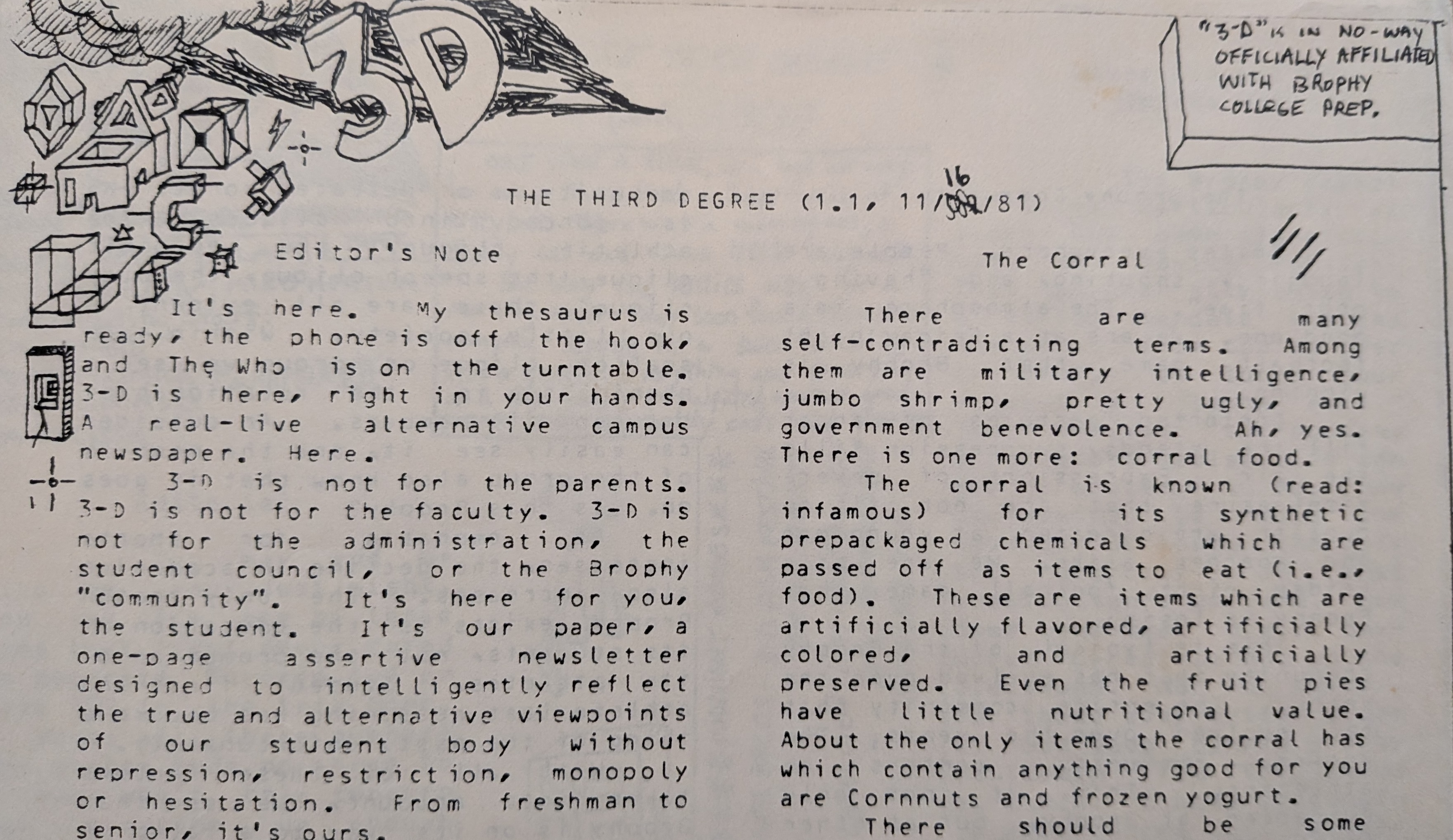
On December 3, 1981, an anti-authoritarian countercultural collective’s one-ring circus was performing in a Jesuit college prep’s parking lot as a group of us handed out copies of the second issue of an underground student newspaper, The Third Degree. 3-D for short, its first issue had been handed out 17 days earlier without any bylines, and none of us had gotten into any trouble. That didn’t quite hold for this second issue, though not for a reason you might expect.
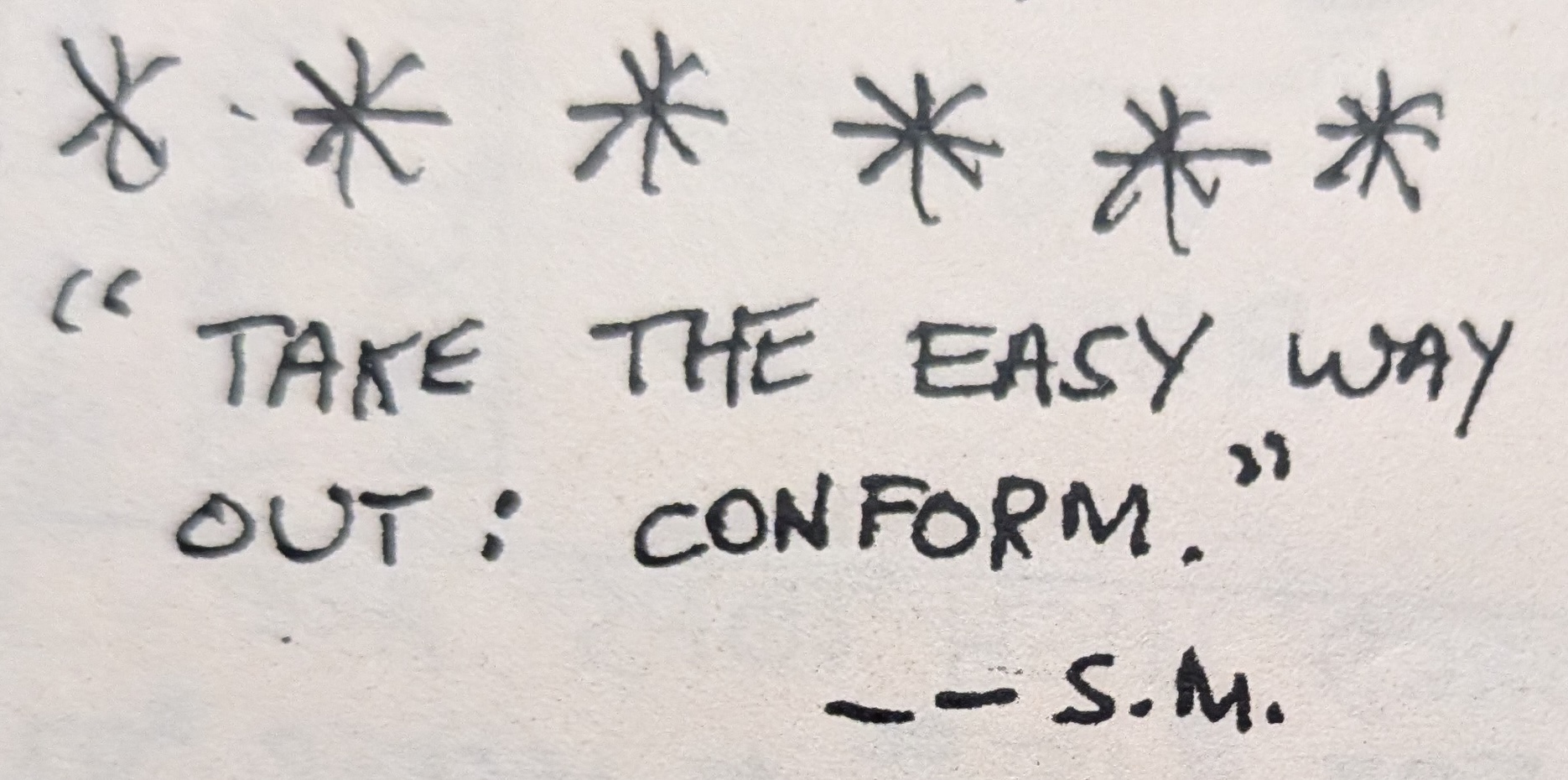
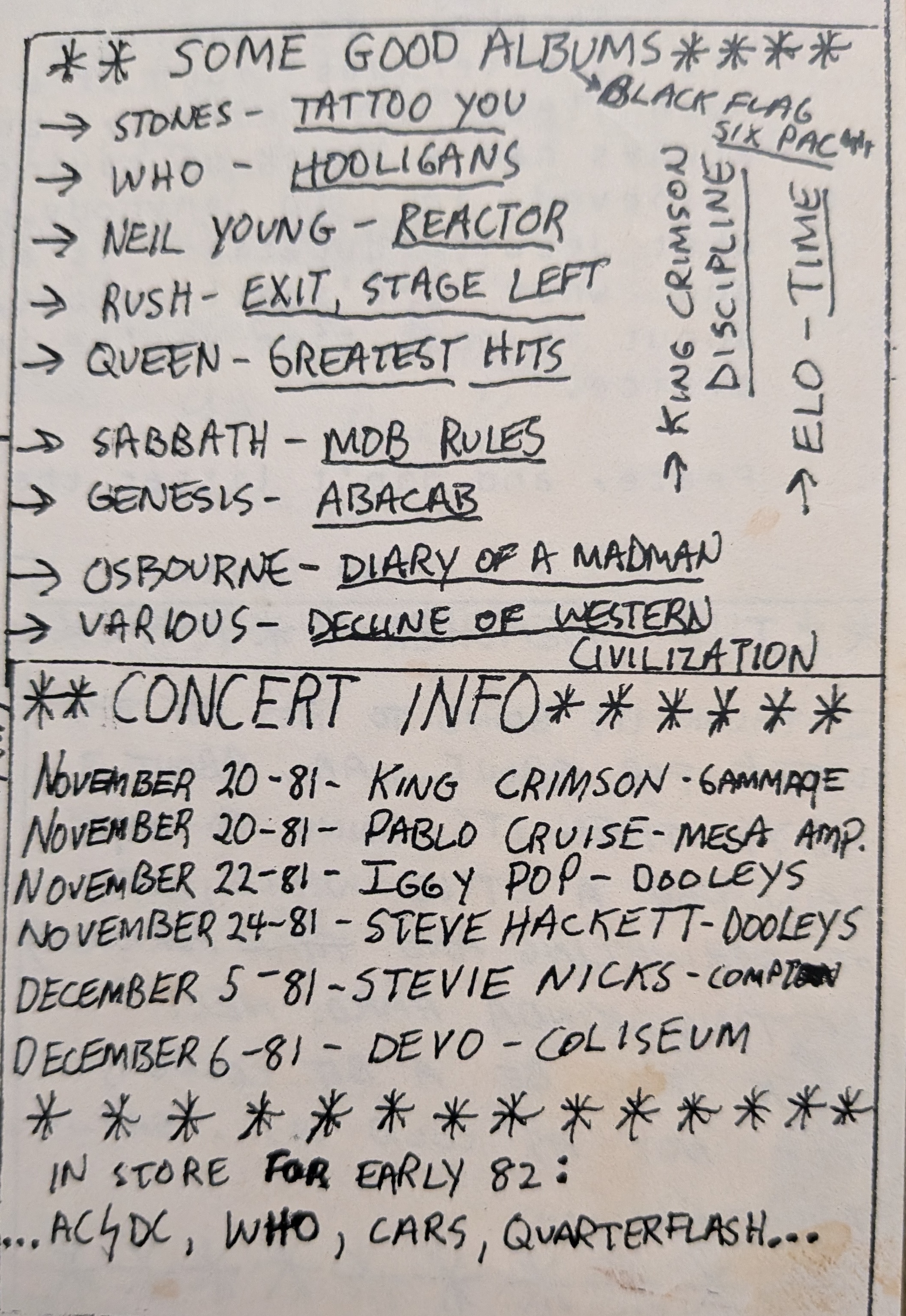
That previous, first issue described itself in the editor’s note as “a one-page assertive newsletter designed to intelligently reflect the true and alternative viewpoints of our student body without repression, restriction, monopoly, or hesitation. … It presents the reader with different fare: instead of sports, alternative music; instead of student-teacher interviews, problem recognition and suggestion articles; instead of boredom, entertainment and enlightenment.” The first issue had no bylines, but had a critique of “The Corral,” the on campus snack bar that was the closest thing to a cafeteria, for its offerings of poor nutritional value. (Most of us brought lunch from home.) On the back was a critique of the level of focus on athletics and listed some upcoming concerts (King Crimson, Pablo Cruise, Iggy Pop, Steve Hackett, Stevie Nicks, and Devo) and “some good albums” ( Black Flag, King Crimson, ELO, The Who, Neil Young, Black Sabbath, and the “Decline of Western Civilization” soundtrack); the punk recommendations were Steve. And at the bottom of the first page was the sarcastic suggestion, in quotes, “Take the easy way out: conform.” That was attributed to “S.M.” That was also Steve.



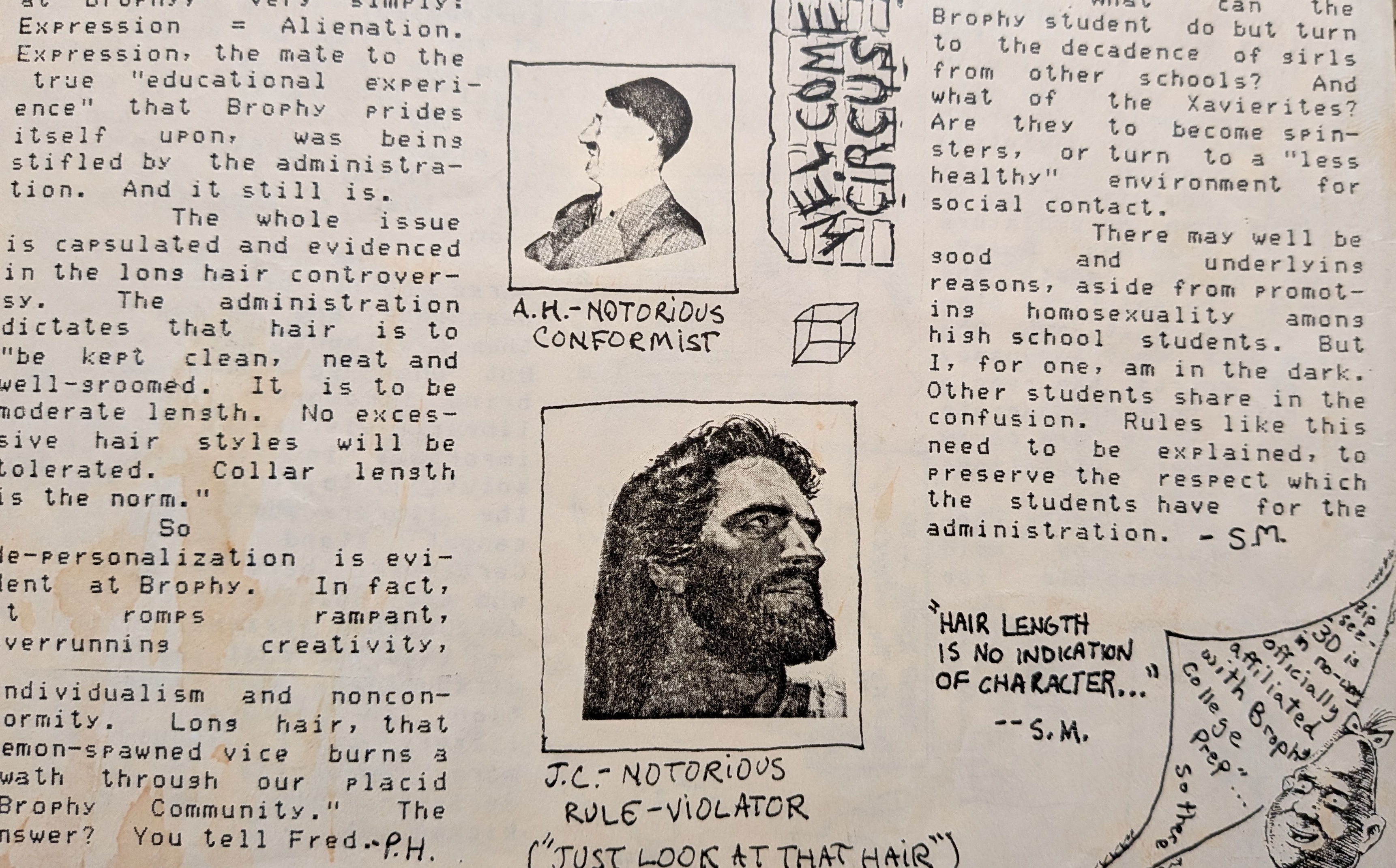
This second issue, which included a “WELCOME CIRCUS” message on the front, had bylines this time. Pete was the editor, Mike the assistant editor, Steve, Marty, Tom, and I were contributors and “graphix” was noted next to Steve’s name. A small picture of Jesus was captioned “J.C. - notorious rule violator (‘just look at that hair’)” and another quote attributed to S.M.: “Hair length is no indication of character…” The back included a critique of the overly restrictive library policies on discussion that I wrote, and next to it, the thing that got us in trouble. Each copy was stamped with the librarian’s rubber stamp in red ink: “BROPHY PREP LIBRARY.” I don’t recall the punishment, but we all graduated successfully.


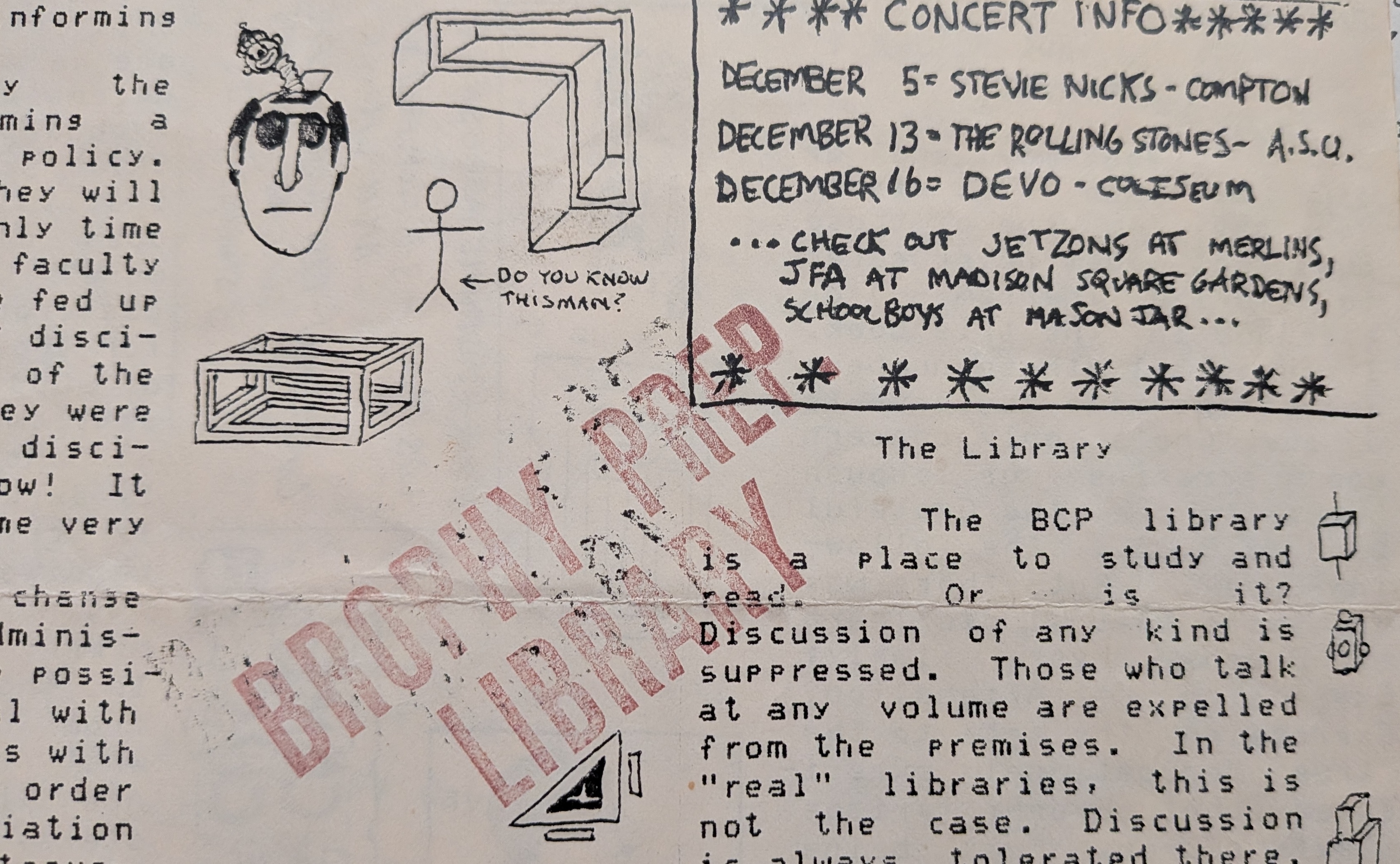
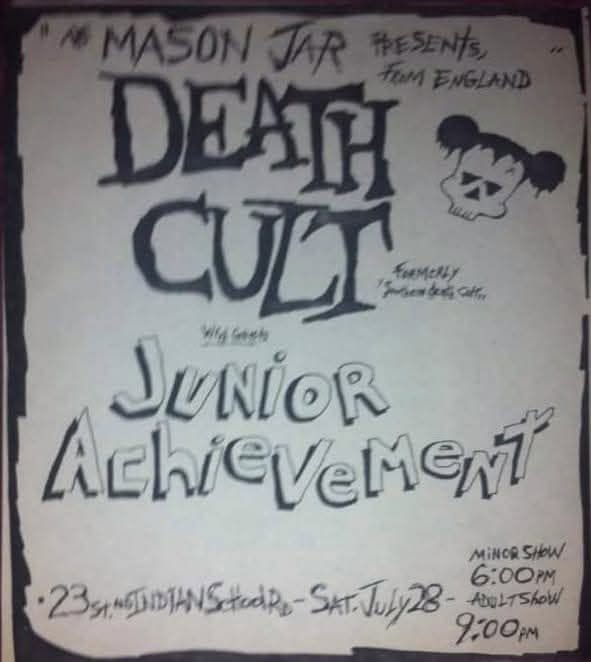
One more issue was printed and distributed on August 30, 1982, but Steve’s name wasn’t on it and it wasn’t as memorable as the first two issues. Steve was likely too busy with his other projects, as he had already started playing punk shows in public–first with Fatal Allegiance (April 1982) and then with Junior Achievement by October.
I remember regularly listening to punk music in the parking lot as a group of us sat in Steve’s Jeep–Agent Orange, Symbol Six, Bad Religion, T.S.O.L., the Sex Pistols.
In December 1982, there was a holiday party at my house for the members of the Honeywell-sponsored computer career interest Explorers Post (Post 414) that several of us belonged to (including Steve, though I think he joined later). Steve and Pete were in the band that played at the party, along with Mark, Cinco, and another Steve.

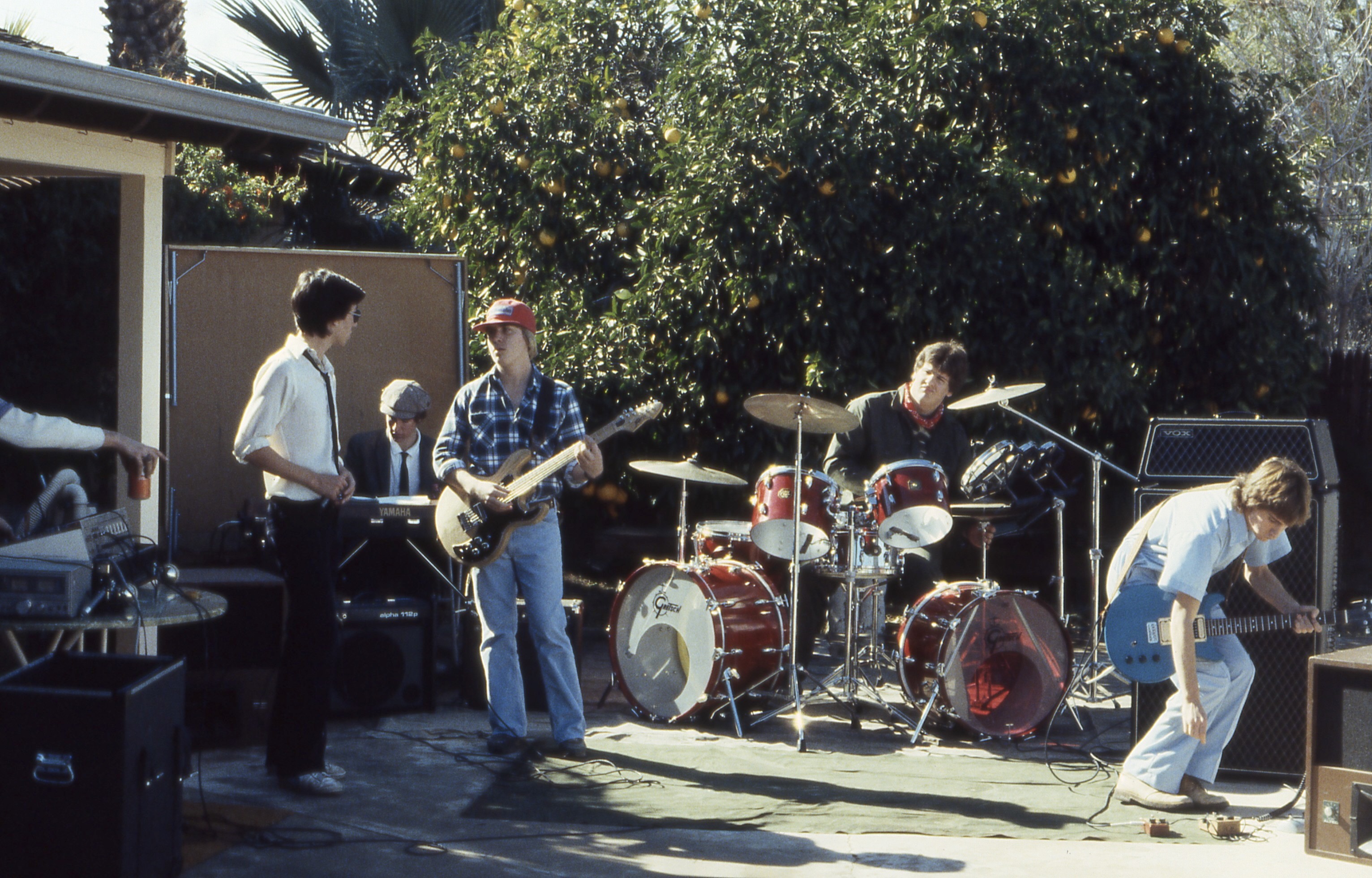

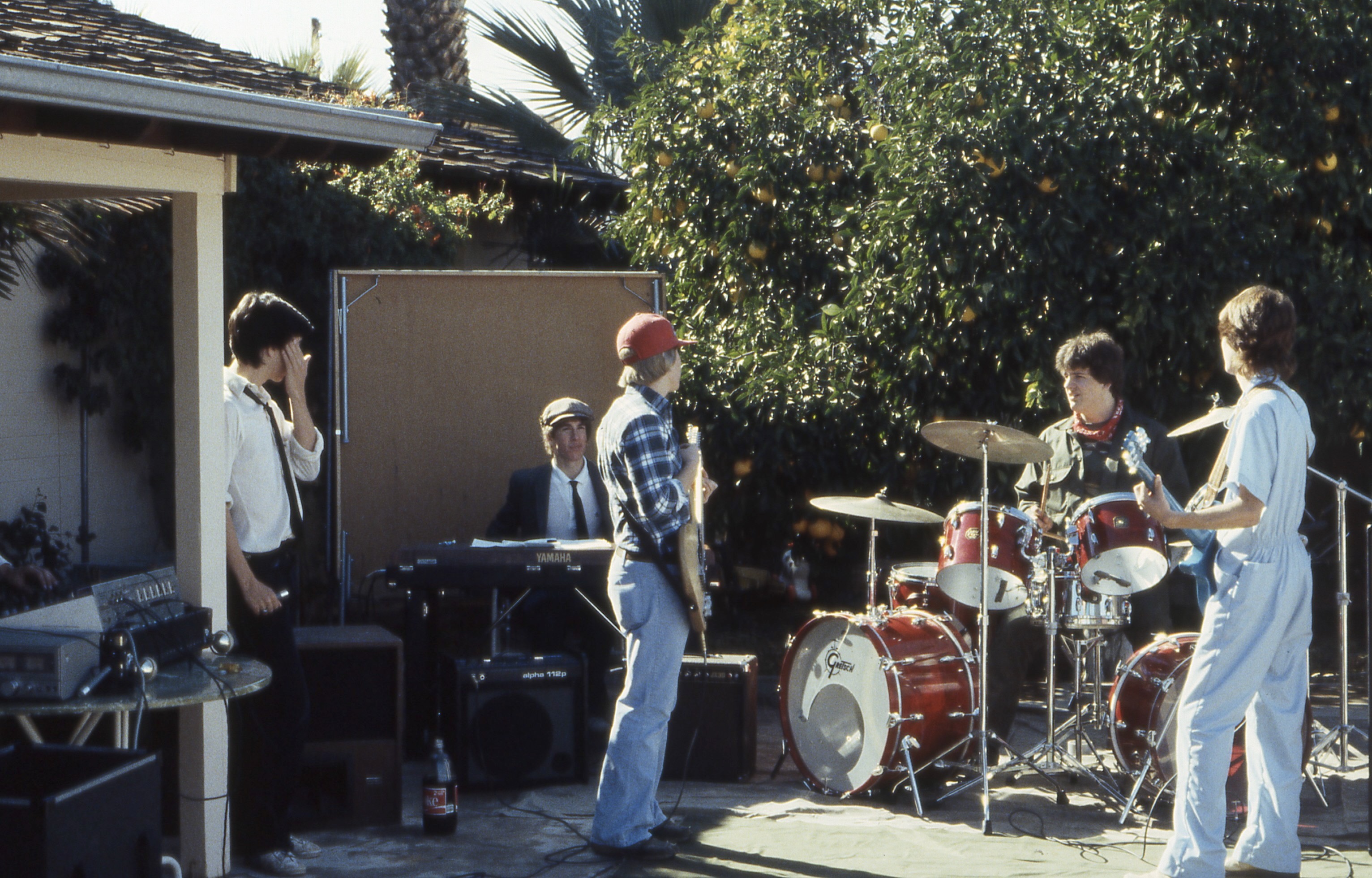
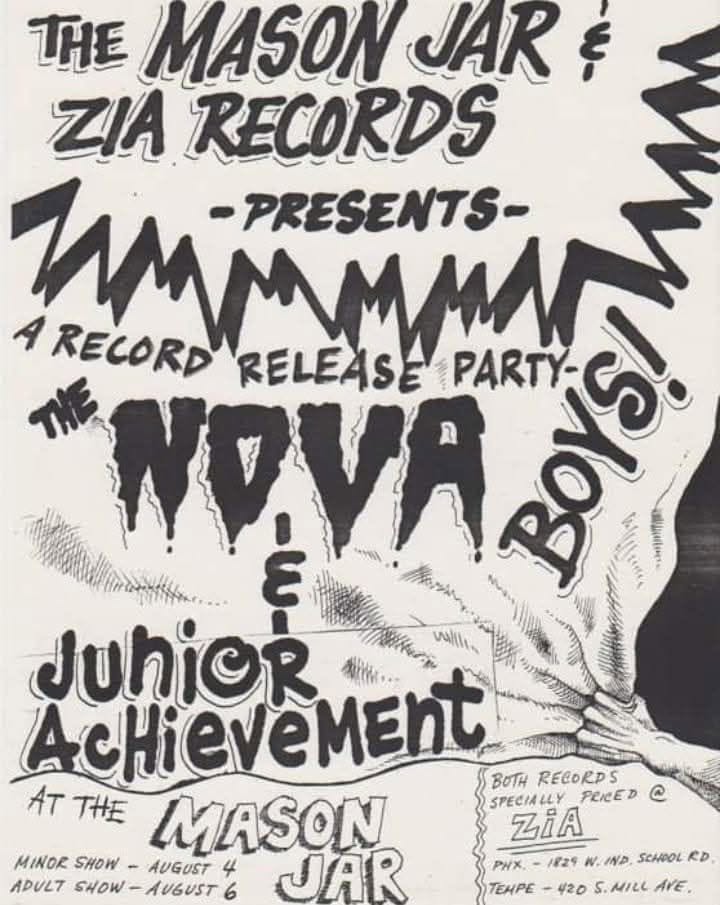
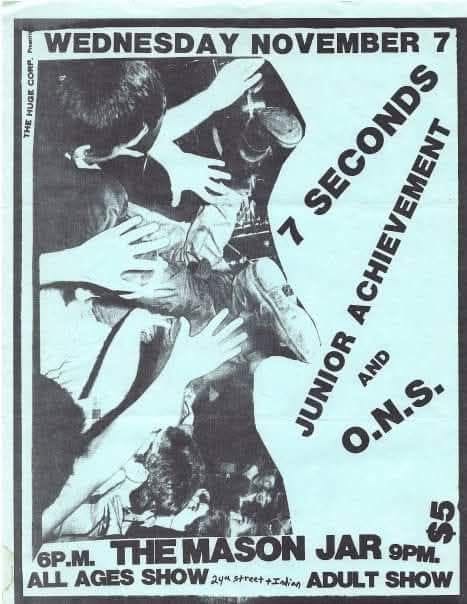
By the spring of 1983, our last semester of high school, Junior Achievement was playing regular shows and I started attending some of them and experienced the punk scene directly for myself.
By 1983 we had all graduated from high school (Pete, Mark, and Cinco had already graduated in 1982), and most of us went to ASU in Tempe or UA in Tucson. I don’t think Steve and I had any classes together, but we saw each other on many days hanging out at the fountain outside the Memorial Union, which was also a bit of a skate punk hangout.
On Halloween of 1984, Steve’s band played a double bill at Tempe’s Valley Art Theatre with the punk rock fiction drama movie “Suburbia”–Penelope Spheeris’s second film after her documentary “The Decline of Western Civilization” that was promoted by 3-D.
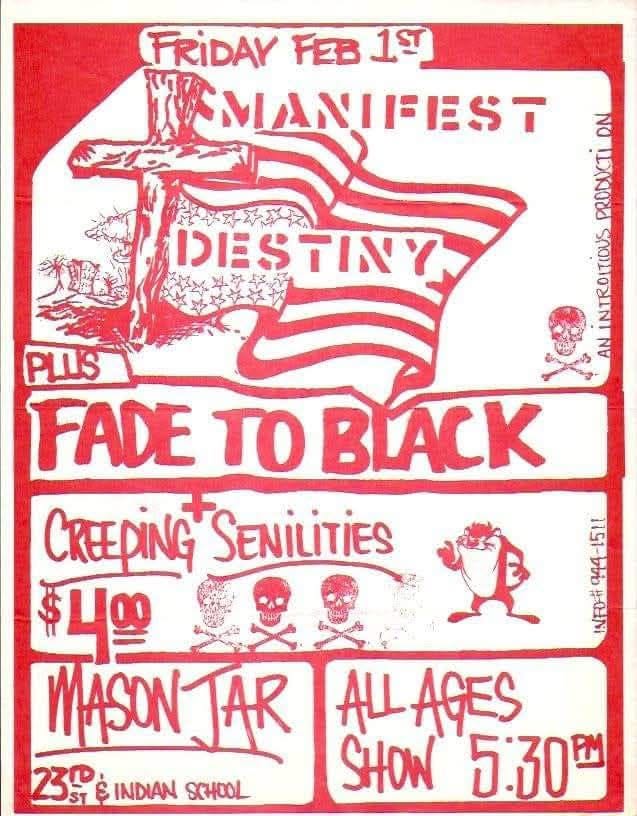
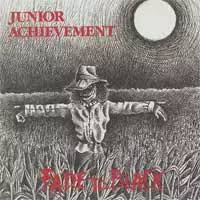
Steve’s band, Junior Achievement, released its first and only album, “Fade to Black,” in November 1984, and the Junior Achievement organization sent a cease-and-desist. The band became first “Fade to Black” and then “The Harvest,” with a few changes to the lineup. The Harvest played its last show some time after being awarded “best underground band” by New Times around October 1985.

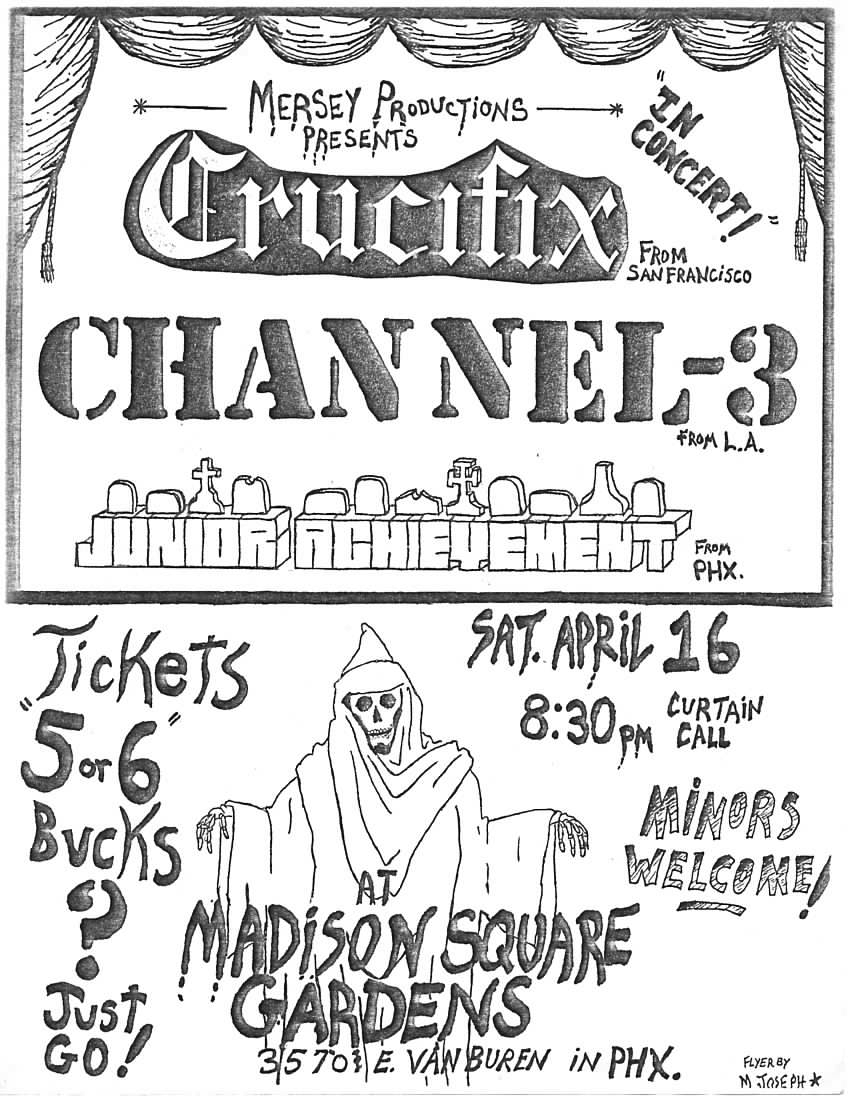




![Fade to Black, Sphincter, Auga [sic] Fritas](#19851228-ftb-sphincter.jpg)
![Fade to Black, Sphincter, Auga [sic] Fritas](/2026/07/remembering-steve.html/19851228-FTB-Sphincter.jpg)

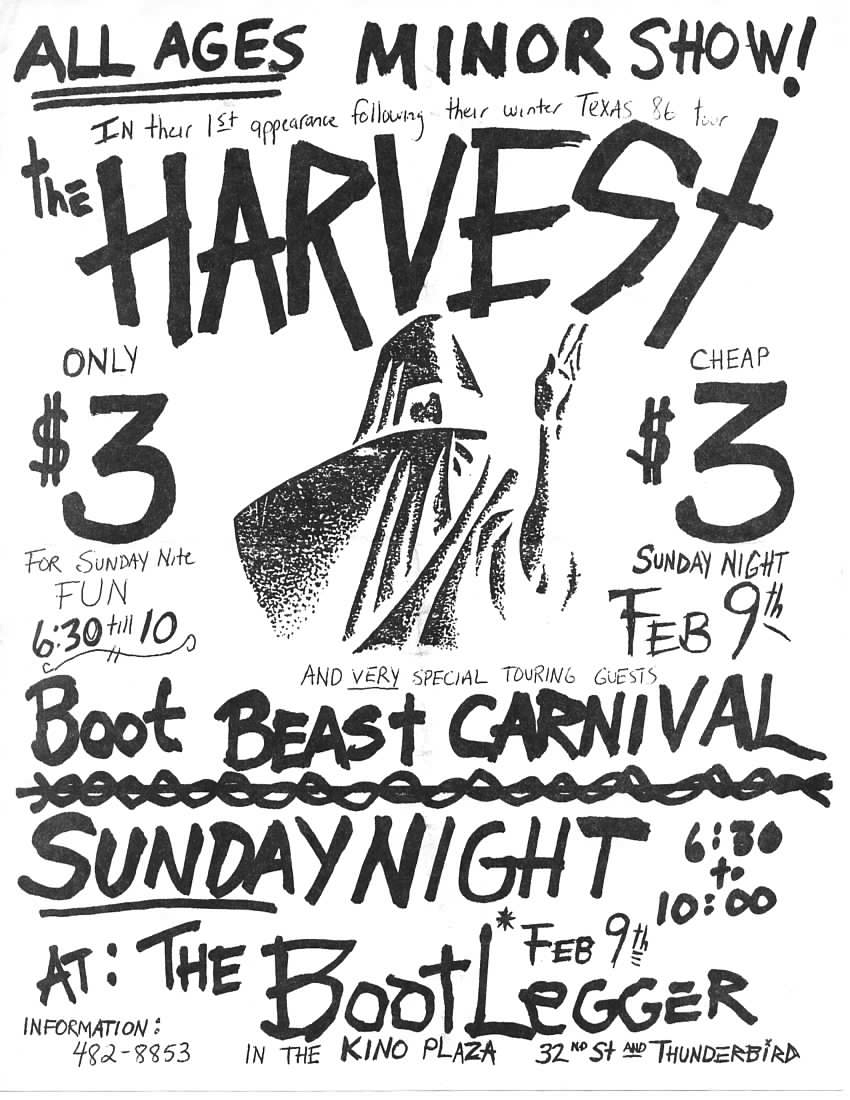

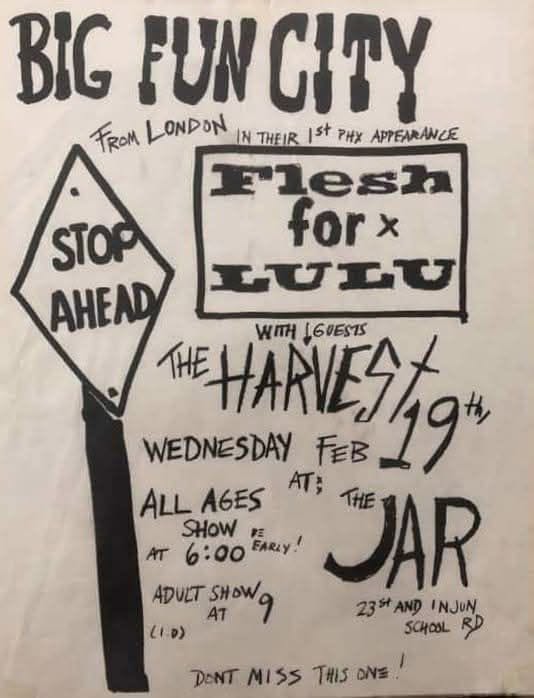

After finishing college, we lost touch for a while; I moved to Tucson for grad school and never saw Steve perform with Hooks for Hands, a group he co-founded in 1987 (and which disbanded by 1990). When I returned to Phoenix in 1994 to start working at an early Arizona ISP, Primenet, Steve signed up to be a customer and we renewed contact. Steve was working in graphic design and website design.
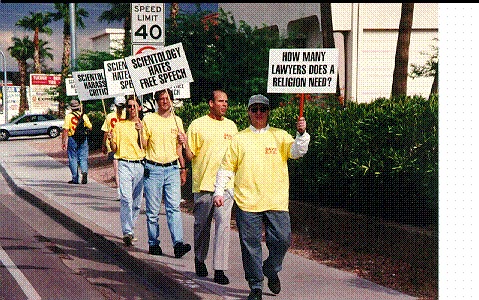
We were both fans of the Pixies and Frank Black, and we were both critical of the Church of Scientology’s attempts to silence and harass its Internet critics in early 1995, and those things came together over a few days in March 1995. On Saturday, March 11, 1995, I made some Scientology picket signs in the morning, then met Steve at his house before going out with him, his brother John, and Pat and Tony to see Frank Black at Gibson’s in Tempe. On Monday, March 13 (L. Ron Hubbard’s birthday), we met at Jeff Jacobsen’s house before going to our first picket of the Church of Scientology’s Mesa Org. The instigating factor for this protest was that Scientology was going after its Internet critics in its usual aggressive manner. Just one month before, on February 13, federal marshals and Scientology lawyers raided the home of former Scientologist (and OTVIII) Dennis Erlich in Glendale, California, and sued the bulletin board system (BBS) he posted on, Support.com, and its upstream ISP, Netcom. Similar raids would subsequently happen against Arnaldo Lerma in Virginia on August 12, and against Lawrence Wollersheim and FACTNet in Colorado on August 21-22. A total of five of us participated.

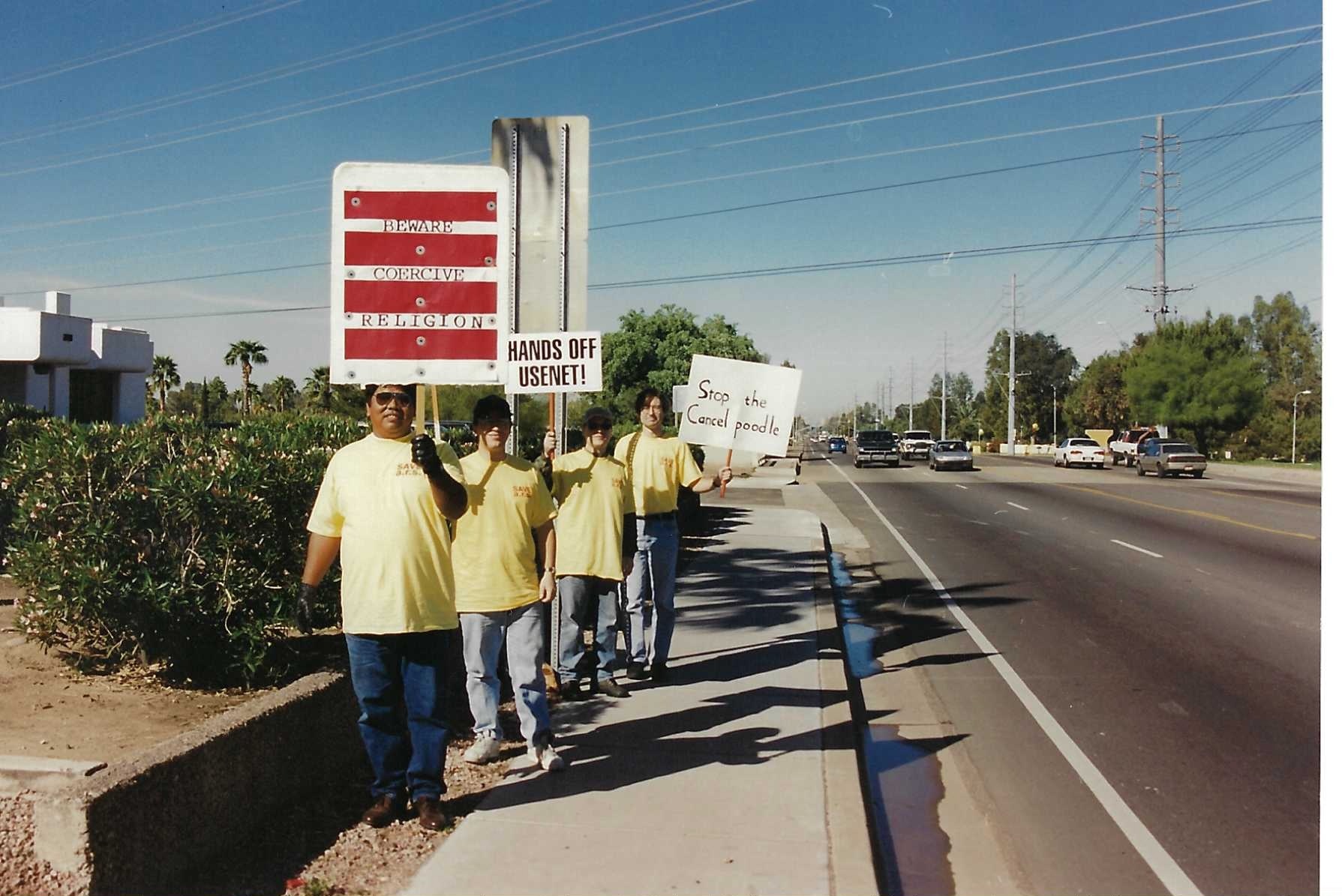

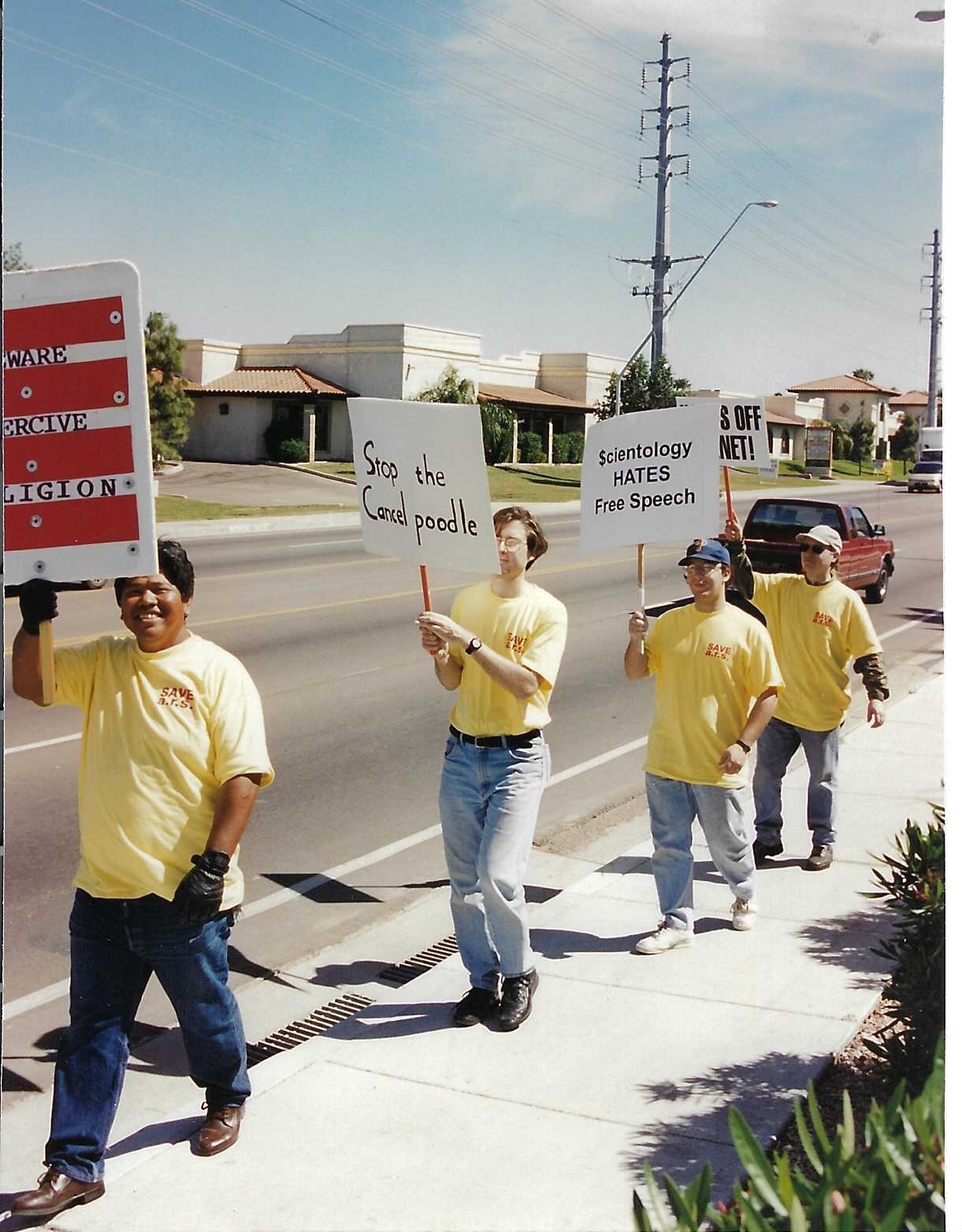

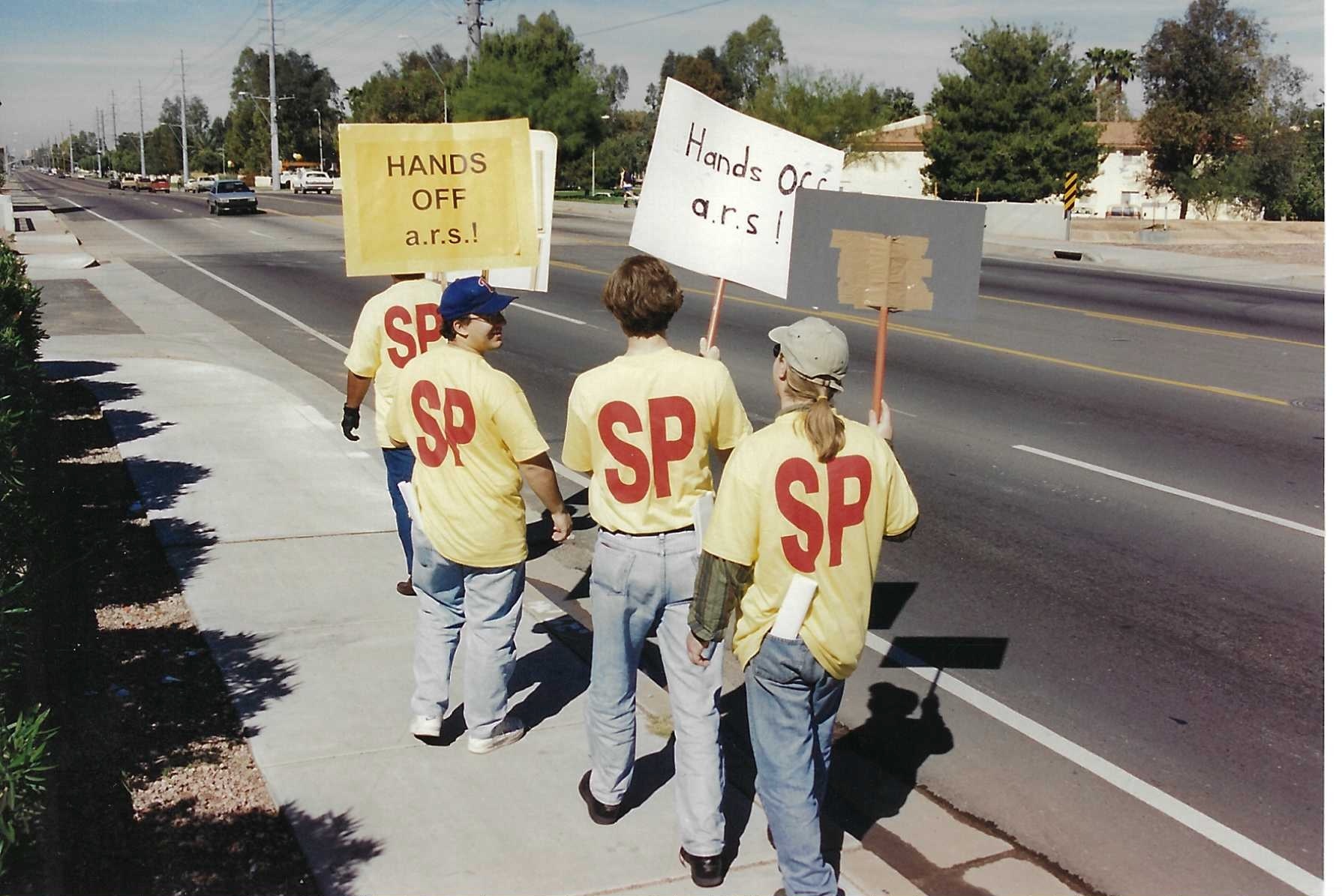
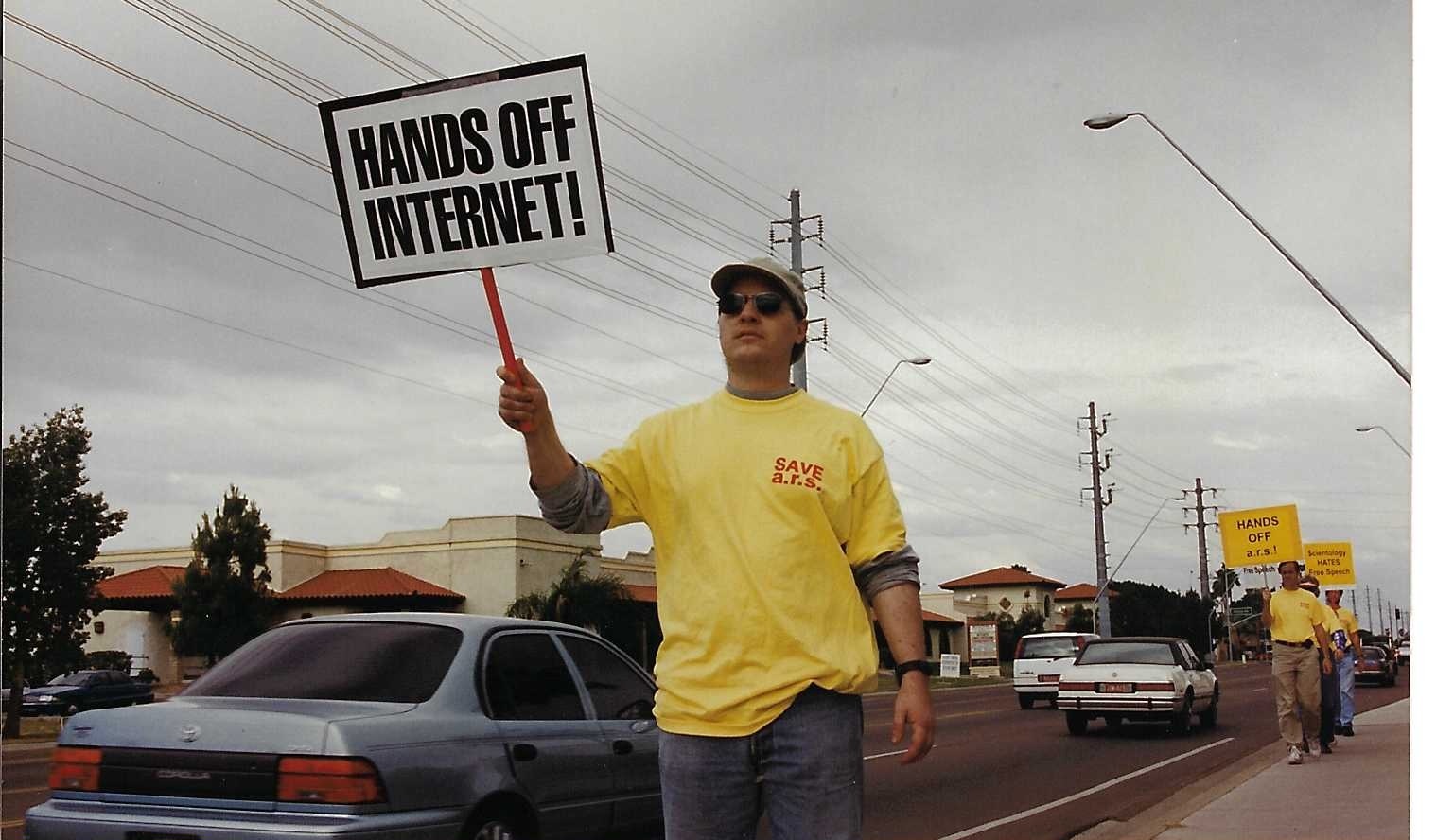
Steve and I participated in a second protest, on May 6 (timed to be near the Dianetics publication anniversary, May 9). This time there were seven of us and this time the Scientologists called the police on us and had private investigators photograph us and our vehicles. Steve took the opportunity to take photographs of the private investigators. Steve and I each wrote articles about our experience–Steve’s was “Johnny Get Your Modem,” published in local Phoenix arts magazine Java’s June 1995 issue, while I wrote up a quick summary of the details of the day, and Jeff Jacobsen and I wrote an article for Skeptic magazine that included a paragraph about the protests. These protests and articles (and others like them) laid the groundwork for future massive worldwide protests against Scientology by Anonymous on February 10, 2008.


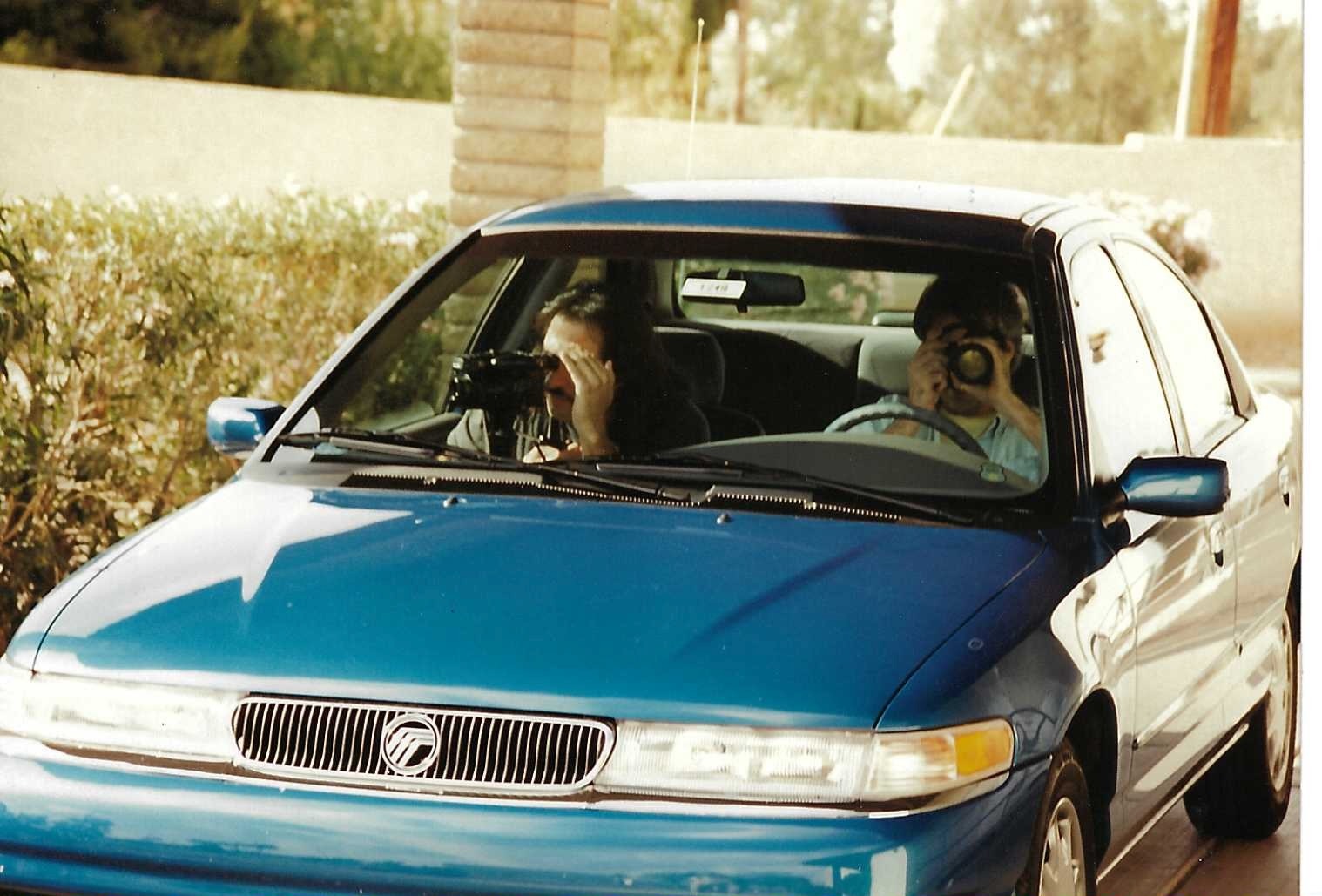
Steve wrote a followup post to the alt.religion.scientology newsgroup on August 15, 1995 about Scientology’s reaction to his Java article–they attempted to get Steve’s address and phone number, pitched a followup story by showing up unannounced at the publisher’s home doorstep, and perhaps did a bit more (see the notes below).
There were more protests over the next few years, including one more in 1995 on September 9–to coincide closely with Auditor’s Day–with at least eight people that Steve and I both participated in. On March 9, 1996, there was a fourth Mesa protest, and Steve and I were invited inside to have lunch with Ginny Leason, the OSA Director of the Mesa Org. We had a pleasant chat, in which she asked what would make us stop protesting and we said Scientology should stop trying to shut down criticism on the Internet. We also told her she didn’t seem to be well informed about what was happening, and that we would send her details, which we did. She followed up with a letter to the editor of the Arizona Republic claiming that our criticisms were “nothing but noise.”

Throughout 1995 and 1996 I saw Steve fairly frequently, for a while going out with him to the TT Roadhouse almost on a weekly basis. I finally managed to see Agent Orange with Steve, his brother John, John’s girlfriend Lucy, and a few others (June 17 at the Nile Theater).
Around May 1996 I asked Steve if he could help teach me guitar, and he found one for me (a Charvel/Jackson) and helped me buy it. My ask was to learn how to play Pixies songs… but after a couple of short lessons, I ended up getting distracted by other things and I never learned.
I had an autographed copy of Paul Krassner’s autobiography, Confessions of a Raving, Unconfined Nut, which I really enjoyed and loaned to Steve. He told me later that he enjoyed it so much he immediately bought his own copy. Krassner, who People magazine called the “father of the underground press” (he famously responded that he demanded a paternity test), was co-founder of the Yippies, an anarchist prankster who was spied on by Scientology and the FBI–it was a pseudonymous letter to the editor of Life magazine written by an FBI agent about him that gave the book its title. Scientology sued Krassner for $750,000 over nine words of an ad for an article he hadn’t written: “The Rise of Sirhan Sirhan in the Scientology Hierarchy.”
I saw him less and less, and we fell out of touch apart from some periodic message exchanges. In September 2009 I invited him to a party at my house, but he was unable to make it. I noticed his Facebook page said he was a fan of Oscar Levant’s Memoirs of an Amnesiac (1965) and agreed it was a great book and recommended Groucho Marx’s two autobiographies and Harpo Marx’s biography, along with (without remembering I had already loaned it to him), Paul Krassner’s book. He pointed me to two more books by Levant (A Smattering of Ignorance (1942) and The Unimportance of Being Oscar (1968)) which I bought and contacted hm about a week later about, making note of Roddy McDowall’s first book of photographs, Double Exposure (1966), prompting Steve to recommend Vincent Price’s biography: “You know Roddy and V Price were great friends. Although not as sharp-tongued as Oscar’s work, Price’s bio is a gem.” I bought and read that one as well, which was also a primer on art: I Like What I Know: A Visual Autobiography (1959).
In March 2013, he contacted me about watching and enjoying a YouTube video of a talk I gave in January on Scientology, and we compared notes on what we were up to and our mutual involvement in animal rescue (he was volunteering at the Maricopa shelter working with cats with prompting from his sister-in-law; I was working with dogs for a dog and cat rescue).
In 2018 he made a point of wishing me a happy birthday, and in December I sent him the 1982 Explorers Post party photo above and asking him if he could identify anyone besides Pete and himself. I noted that Pete was now working for a relative and passed along his phone number in January 2019 and his last direct message to me was “Thanks again.”
In November 2019 Steve noted on Facebook that he found an 1885 book (apparently a first edition) of Charles Barnard’s Wonders of the Universe, and posted a photograph of the red, black, and gold cover of the book, in much better shape than the ones offered for sale online. He made the image his Facebook cover image, though it only showed “of the Universe”, prompting one person to refer to Steve as “Stephen of the Universe.”
As I look today at Steve’s list of past Facebook events he was interested in attending, I see many that I wish I had attended, and hope he was still going out for: Symbol Six at Chopper John’s on June 18, 2016; the Adrian Belew Power Trio at the Crescent Ballroom on March 26, 2017; Five Decades of Local Music History at the Tempe History Museum on October 19, 2017; the Haunted Phoenix Bus Tour with Marshall Shore, the Hip Historian on October 28, 2017; Peter Murphy 40 Years of Bauhaus at The Van Buren on January 25, 2019.
Steve Elliot Marinick–Steve of the Universe–died on June 12, 2022.
Sources and Notes
The “anti-authoritarian countercultural collective’s one-ring circus” was the Pickle Family Circus, founded in 1974 in San Francisco.
The first editor of The Third Degree and the guitarist in the ad hoc Explorers Post band was Pete Holmes (‘82), who subsequently started a band in Tucson in 1987 called Pollo Elastico which played regularly until at least 2006, toured with Faith No More, and returned to Tucson earlier this year for a multi-band reunion show.
The keyboardist in the ad hoc band was Cinco Paul (‘82), who co-wrote the “Despicable Me” screenplays and just won three Tony awards for his musical (and now TV series), “Schmigadoon!" on June 7.
The singer in the ad hoc band was Mark de la Vina (‘82), who became an arts and entertainment (and business) journalist, first for the Arizona Daily Wildcat in college and then for the San Jose Mercury News before going into public relations and communications.
The drummer in the ad hoc band was Steve Lee (Camelback High School), whose common name prevented me from tracking him down.
The Honeywell-sponsored Explorers Post 414 existed from at least the mid-1970s to the late 1980. Two of its later alumni co-founded two of the first ISPs in Phoenix, Internet Direct (acquired by Earthlink) and Primenet (merged with GlobalCenter, which was acquired by Frontier Communications, which was acquired by Global Crossing, which was acquired by Singapore Technologies Telemedia and then sold to Level 3, which was acquired by CenturyLink after it had acquired Qwest, after it had acquired Mountain Bell, which had been the sponsor of another Phoenix career interest Explorers Post 264, which was around as of a January 30, 1967 story in the Arizona Republic). Post numbers are recycled and Post 264 is now the Anchorage Fire Explorers.
The early 1980s Phoenix punk scene is described on this blog in a post recounting show flyers and venues.
Fatal Allegiance was a collaboration between Steve Marinick and competitive skateboarder Todd Joseph.
Junior Achievement consisted of Jon Yousko (vocals), Steve Marinick (guitar), Todd Joseph (bass), and Scott Chazan (drums).
The October 24, 1982 Calderon Ballroom performance of Junior Achievement was reviewed in the first issue of Gagging Dog.
Junior Achievement’s only album was called the second “most influential Arizona punk rock record” by Tom Reardon in Phoenix New Times in 2015 in which he follows up on the band members; he called it “arguably the most popular punk record to come out of this town, and definitely one of the most sought-after to possess on vinyl” in 2014. The full album is on YouTube here. A live recording of a performance before the name change is here. (Reardon’s #1 most influential Arizona punk rock record was the Consumers’ “All my Friends Are Dead” which was recorded in 1977 and released in 1995. Paul Cutler of the Consumers went on to found 45 Grave, which originally played Consumers songs.)
The Junior Achievement album release was noted in Maximum Rocknoll (MRR) issue #19 with the review: “Powerful production and an incisive guitar sound conspire to make this debut album by JUNIOR ACHIEVEMENT both dramatic and exciting. None of the songs in particular stand out from the rest, but the ten mid-to-fast-speed HC tunes here boast clever arranging touches that add good measures of texture and vitality to the proceedings. A solid LP—with some exotic lyric themes.”.
The album was reissued on CD in 2008 by AZPX.
The Harvest consisted of Jon Yousko (vocals), Steve Marinick (guitar), Danny Bland (bass), and Michael “Bam Bam” Sversvold (drums). Sversvold was the former drummer of J.F.A., and died in 2024. Bland was formerly in the Nova Boys and has been a musician, tour manager, and has written a novel, In Case We Die (2013), about Seattle grunge rock musicians on tour, and a book of haiku, I Apologize in Advance for the Awful Things I’m Gonna Do (2013).
Jon Yousko’s photos in remembrance of Steve are on the AZPX website and include a photo of the New Times award to The Harvest for “best underground band” in 1985. This post features a quote from Yousko: “I think our drummer Scott Chazan said it best…Steve Marinick put the rock in punk rock.”
Hooks with Hands consisted of Joey Cultice (vocals), Steve Marinick, Christie Winn, and Lloyd Whitter. Joe Cultice started by photographing Phoenix punk bands (first the Meat Puppets, and including the photos for Junior Achievement’s album cover) before moving to New York in 1990, photographing Nine Inch Nails on their “Downward Spiral” tour, and becoming an internationally well-known photographer for entertainment and fashion. He wrote a brief memoriam for Steve that includes one of his photographs.
The February 13, 1995 raid on the home of Dennis Erlich is described here.
The Andre in the protest photos is Andre Taboyoyan, who was L. Ron Hubbard’s steward on the Apollo and later head of security at Scientology’s Gold Base. His wife, Mary, was L. Ron Hubbard’s personal cook.
Steve’s article, “Johnny Get Your Modem,” from the June 1995 issue of Phoenix’s Java magazine, can be found on the Internet Archive. Steve’s photographs of the private investigators can be found on this web page. My contemporaneous writeup of the May 6, 1995 protest is here.
Steve’s followup a.r.s post about the aftermath of his Java article.
Jeff Jacobsen and I included a paragraph about the protests in our “Scientology v. the Internet” article that was subsequently the second link in Anonymous’s January 21, 2008 press release calling for protests and in the text sidebar to a YouTube video calling for protests on February 10, 2008, which occurred in over 100 countries attended by thousands of people. February 10, 2008 was the birthday of Lisa McPherson, a Scientologist who died on December 5, 1995 after being held for 17 days by Scientology. These 2008 protests were studied as the basis of Patrick C. Underwood’s Ohio University master’s thesis in sociology and in Jeff Jacobsen’s “We are Legion: Anonymous and the War on Scientology”.
The January 19, 2013 talk that Steve contacted me about was “The Decline (and Probable Fall) of the Scientology Empire," which I gave to the National Capitol Area Skeptics and said “uhm” way too many times. The blog post linked to here contains errata for the talk. A blog post of the same title from a year earlier is about a Skeptic magazine multi-book review that covered related material.
The Paul Krassner bit about a paternity test for being named “father of the underground press” by People was a recurring bit and can be found in his July 21, 2019 Los Angeles Times obituary and in this February 2009 interview by David Kupfer in The Sun. I was first to put excerpts of The Realist online (with Krassner’s permission), but Ethan Persoff subsequently did a much better job of it and put the complete Realist archive online.
Krassner recounted the results of his Scientology research about Sirhan Sirhan that caused him to research Charles Manson instead in his book One Hand Jerking: Reports from an Investigative Satirist (2005).